
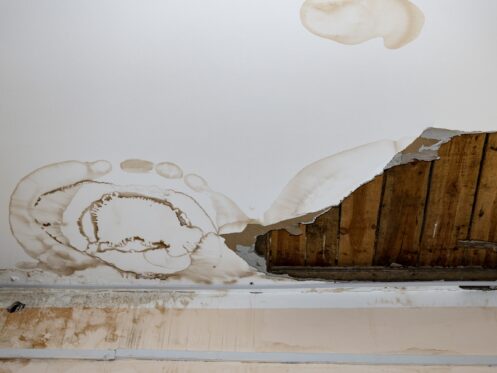
Even the smallest roof leaks have the potential to do massive damage to your home. While catching a leak early can save you thousands, ignoring it can lead to mold and serious structural issues.
Leaks Around Chimneys and Roof Vents
If your home has a chimney, there is a good chance your first roof leak will appear nearby. The flashing around your chimney and vent pipes is one of the most common weak points in any roofing system. When your flashing rusts, cracks, or shifts due to wind or temperature changes, it leaves a tiny gap that rainwater can easily exploit.
A small drip near your fireplace might not seem urgent. However, that moisture can travel, which can result in soaking your attic insulation and rotting the wooden framing beneath. You may also notice musty odors or faint stains that grow darker over time. If you see these signs, it’s time for a professional inspection.
Leaks in Roof Valleys and Low-Slope Areas
The valleys of your roof, where two slopes meet, carry an enormous amount of water during storms. Over time, the protective materials in these areas wear down faster than the rest of the roof. Debris buildup, cracked sealant, or misaligned shingles can create small spaces that allow water to seep beneath the surface.
If you notice leaks forming near the middle of your ceiling or see water stains that extend in long streaks, the problem could be in a roof valley. These leaks are sneaky because water often travels sideways under shingles before dripping through the ceiling somewhere else. Low-slope roofs are prone to this because water doesn’t drain quickly, and small puddles can find their way into the decking below.
Leaks From Missing or Damaged Shingles
After a heavy storm, take a look at your roofline. If you see curled, cracked, or missing shingles, water is probably getting in. Shingles protect the underlayment and wood decking underneath, so even one missing piece can create a direct entry point for rain.
When water seeps into exposed decking, it softens the wood fibers, which leads to warping and decay. Over time, the damage spreads to nearby shingles, causing more to lift and crack. You might spot small drips inside after rain or discover soft spots when walking on the roof. The longer you take to replace damaged shingles, the more likely water is to reach the wood supports underneath your roof.
Leaks From Clogged Gutters and Ice Dams
It’s easy to underestimate how much your gutters matter until they clog. When leaves, dirt, and debris fill the channels, rainwater has nowhere to go. It backs up under the edge of the roof and seeps beneath the shingles. In winter, that trapped water freezes into ice dams that can lift shingles and force meltwater into your attic.
Some signs of a gutter-related leak include water streaks on exterior walls, stains near the eaves, or leaks along the roof’s edge after heavy rain. Left alone, the moisture can rot fascia boards and damage soffits. Prevent these leaks by cleaning your gutters twice a year and installing gutter guards if nearby trees drop heavy debris.
Leaks Around Skylights and Roof Penetrations
Skylights, plumbing vents, and satellite dish mounts can penetrate the surface of the roof, and each of those openings can turn into a potential leak point. The seals around these fixtures degrade over time due to sun exposure, shifting temperatures, and simple wear. When that happens, water slips beneath the flashing and seeps into the surrounding materials.
If you notice condensation between skylight panes or a faint water ring near a ceiling vent, moisture could already be an issue. These leaks often lead to damaged drywall, bubbling paint, and soft wood around the opening. Our team can reseal or replace the flashing and inspect the decking to ensure water hasn’t spread deeper into the structure.
Leaks From Poorly Sealed Roof Edges
Roof edges and eaves take a beating from the wind and rain. If the drip edge flashing becomes loose or corroded, it allows water to slip behind the fascia and into your attic. This problem often hides until stains appear on your interior walls or ceilings. Replacing worn drip edges and making sure you have a tight seal along the perimeter can prevent this slow, steady damage that weakens the roof’s foundation.
Don’t Wait to Fix the Drip
Every roof leak has a story to tell about what’s happening above your head. Acting quickly prevents costly structural repairs and keeps your home dry and stable for years to come. At Structured Foundation repairs, we have been delivering dependable foundation services to the Dallas and Fort Worth area since 2003. If you spot a ceiling stain or water pooling where it shouldn’t be, call us for an inspection today.
