Flat roofs are common for commercial buildings, but many modern homes are using them too. Many property owners don’t think much about overhead until there’s an issue. That could be a stain on the ceiling following a heavy storm or water sitting on a roof days later. These are small signs that frequently point to bigger problems you shouldn’t ignore. Fortunately, there are many solutions for flat roofs and local professionals who can deliver the services your home or building needs.
What Is a Flat Roof?
Before covering the potential problems and solutions of flat roofing, it helps to know what it looks like, how to tell if your structure has one, and how it differs from a sloped roof.
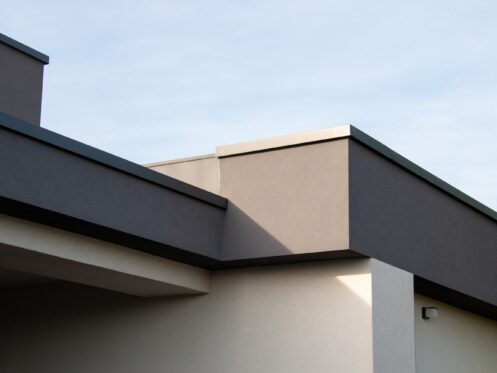
A flat roof is a type of roofing system that looks level to the naked eye but actually has a slight slope to help water drain. This slope is typically rather subtle; you might not even notice it from the ground, even from your yard or parking lot. Flat roofs are common for apartment complexes, commercial buildings, and contemporary residential homes.
You probably have a flat roof if your roof surface meets two conditions: first, the roof surface looks nearly level, and second, it’s covered with materials such as modified bitumen, rubber membrane, or built-up layers. Many sloped roofs use tiles or shingles, but flat roofs depend on continuous waterproof materials to keep out any moisture.
The biggest differentiator between flat and sloped roofs is how they manage water. A sloped roof directs water naturally downward, where it falls off the structure. Conversely, a flat roof relies on scuppers, internal drains, or gutters to move any water away, making proper installation and maintenance particularly important.
Why Flat Roofs Are Prone to Issues
A flat roof usually has structural characteristics that leave it more susceptible to particular problems. Since water won’t run off quickly, even a small imperfection can result in standing water and moisture damage. Over time, temperature changes, debris, and exposure to sunlight can wear down roofing materials, compromising the integrity and performance of a flat roof. If you’re a property owner with a flat roof, you need to be aware that it needs professional inspections by industry experts more often than a sloped roof requires. Without routine care, minor issues can turn into expensive problems that impact both your home or building and its interior spaces.
Ponding or Poor Drainage
Ponding happens when water stays on a roof surface for more than 48 hours after the rainfall that placed it there. This is usually caused by a blocked drainage system, structural settling, or an improper slope; a combination of these factors exacerbates the problem. Standing water adds weight to a roof that it might not be able to support, increasing the risks of membrane deterioration and leaks.
Flashing Failure
Flashing is what seals the areas where a flat roof meets vents, walls, and other physical penetrations. Flashing failure is, unfortunately, a common flat roof issue; it can occur due to poor insulation, aging materials, or movement. When flashing fails, water can easily enter a home or building.
Leaks
A leak is one of the most noticeable problems with a flat roof. They usually develop slowly, so they might not be visible until water is inside your structure. Moisture can seep through a roofing system through seam separations, punctures, and small cracks.
Membrane Damage
Flat roofs depend on their membranes to form a waterproof barrier. Over time, these membranes can crack, blister, or tear due to foot traffic, UV exposure, and extreme weather. Once a flat roof membrane is compromised, the roof is vulnerable to potential water intrusion.
Clogged Drains
Dirt, leaves, and debris can all easily clog a flat roof drain. When a drain is blocked, water has nowhere to go. As a result, it starts to pool. Clogged drains are one of the primary causes of water damage and need to be addressed quickly.
Signs To Watch For
Flat roof issues usually give warning signs you should be aware of before major damage happens. Knowing these indicators and always being mindful of them helps property owners take early action. Addressing issues promptly is an opportunity to prevent many problems or, at least, contain them while they’re minor. Waiting until later can cost money, cause stress, and disrupt what’s going on in your home or business, often when you least expect or want it.
- Water stains on walls or ceilings
- Standing water on the roof surface
- Bubbles or cracks in roofing materials
- Damaged or peeling flashing
- Musty odors inside the building
- Visible debris around scuppers or drains
If you notice one of these signs, it doesn’t always necessarily mean you need to schedule a roof replacement. However, it does signal that professional attention is needed, particularly if you see more than one of these warning signs.
There are a number of solutions for flat roof problems. The right one depends on the roof condition and the specific issue at hand. In many cases, prompt repairs can prevent further damage and extend the roof’s lifespan. Improving drainage is usually the most effective way to prevent or reduce flat roof problems. That might involve adding tapered insulation, clearing drains, or adjusting the roof slope to encourage appropriate water flow.
Repairing or replacing damaged flashing can help prevent leaks by sealing vulnerable areas. Dealing with membrane damage early can reduce repair costs by stopping moisture from spreading. Make sure your professional roofing services include routine inspections and maintenance; these are crucial to the performance of flat roofs.
Flat roofs require specialized materials and knowledge from a professional. If you attempt a temporary fix without the proper tools, skills, and experience, you can make a problem worse than it already is. Trained industry professionals know how flat roofing systems work and can repair them correctly. Routine inspections, particularly after seasonal changes or recent storm activity, help protect both the roof and the structure below it. Many property owners also enjoy having financing options when they’re facing a larger repair or total replacement, as it makes it easier to deal with problems without delay.
Schedule Flat Roof Services With Structured Foundation Repairs
Structured Foundation Repairs serves property owners in Dallas, Fort Worth, and the surrounding communities, helping protect buildings from damage caused by structural and roofing issues. In addition to our flat roof solutions, we offer foundation repairs, concrete work, drainage improvements, and professional roofing services.
Schedule an evaluation with Structured Foundation Repairs if you’re experiencing roof issues or want to prevent future ones, and take advantage of our flat roof services to protect your property.
