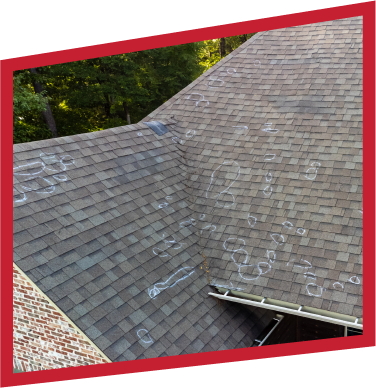
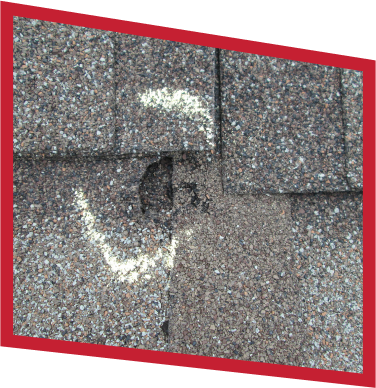
When we show up for a roof service, we bring tools like moisture meters, drones for steep or complex slopes, and we’re not afraid to pop open a vent or two to see how far the damage goes. We’re looking for more than missing shingles. We check flashing overlap, ridge vent stability, underlayment exposure, and look for separation where decking meets fascia.
Some Plano homes have had repairs done by out-of-town storm chasers who used poor adhesive or rushed flashing installs. That kind of shortcut leads to roof leaks that don’t show up until the decking swells or insulation starts to mold.
During a thorough roof service, here are some of the issues we typically find:
- Lifted and improperly nailed shingles
- Sealant failures around pipe boots and vents
- Hairline cracks in flashing
- Uneven wear from poor attic ventilation
- Decking rot beneath low-slope sections
Our team fixes those mistakes properly by removing the affected areas, checking for water intrusion, and resealing with high-grade polymer sealants and corrosion-resistant flashing. We use pneumatic nailers to ensure tight shingle bonds and always replace any damaged decking instead of covering it up.
Other times, homeowners call us after they notice a shingle tab flapping in the wind or a soft spot near the eaves. In those cases, we check the roofline for sagging and measure the ventilation flow to ensure moisture isn’t building up inside. Roof repair can help ensure the entire system, from the drip edge to the ridge cap, is working together.