Texas summers test a roof like few places. When heat builds in the attic, it cooks shingles, warps decking, and makes your air conditioner grind. Pairing proper roof ventilation with the right insulation gives that heat a way out and keeps indoor air more stable. You get fewer hot spots, less strain on equipment, and better roof longevity. At Structured Foundation Repairs in Dallas, TX, we help homeowners dial in balanced airflow and insulation, so the roof system works as designed
Shingles and underlayment also run hotter when hot air stalls at the ridge. That extra stress can age a roof prematurely. You cut that heat stack by pairing steady intake at the soffits with strong exhaust near the peak. When the intake pulls in cooler outdoor air and the ridge sends hot air out, the attic temperature sits closer to the day’s highs instead of spiking. The payoff is steadier indoor comfort and a roof that holds up better through long summers.
Balanced Ventilation: Intake and Exhaust That Work Together
Good ventilation works like a relay. Soffit vents pull in outside air along the lower edge of the roof. Ridge or high gable vents release the hottest air near the top. Both sides need to be open and clear. If soffit vents are blocked by paint, debris, or insulation, the ridge will try to pull air from the living space, and that steals conditioned air. If the ridge is undersized, hot air pools at the peak, and the soffit intake has nowhere to send the fresh air.
A pro can check net free area on both sides of the roof, confirm that baffles keep insulation from clogging the soffits, and right-size the high venting to match your roof layout. On complicated roofs with short ridges, a mix of continuous ridge vent and smartly placed roof vents can finish the job. The goal is steady movement from low to high, so heat has no chance to linger at the top of the cavity.
Insulation That Fits the Climate
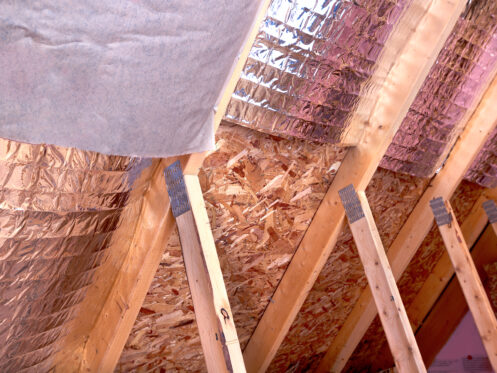
Ventilation moves air. Insulation slows heat crossing the ceiling. You need both in a warm climate with cool nights and hot afternoons. The target depth and material can vary by attic height and framing, yet the idea stays the same. You need a uniform blanket without gaps or thin spots. Voids near can lights, pull-down ladders, and knee walls act like chimneys that wash rooms with attic heat.
A pro will seal those leaks, protect fixtures to meet safety clearances, and then build an even layer across the field. Blown fiberglass and cellulose both work when installed to the right depth. Spray foam can be a fit in special cases, though it changes how the attic breathes and should be planned with ventilation in mind. Whatever you choose, keep insulation out of the soffit bays, and use baffles to keep an air channel free from eave to ridge. The result is a quieter ceiling, fewer late day hot spots, and less strain on cooling equipment.
Moisture Control and Roof Health
Warm indoor air carries water vapor. In a house without a clear attic airflow path, that vapor can drift up and settle on cool roof surfaces at night. That light film invites mildew and can darken sheathing. In winter cold snaps, the same vapor can condense and wet the underside of the deck or the tips of nails. Balanced ventilation lowers that risk by sweeping damp air outside before it settles. Insulation helps by keeping ceiling surfaces warmer, so vapor is less likely to condense.
Intake and exhaust also help your bath fans and kitchen hood by giving that moisture someplace to go after it leaves the duct. The roof wins, too. Shingles bonded to a cooler deck hold granules longer. Metal flashings hold their shape when the attic does not swing from very hot to very cool each day. Over a season, a dry, well-vented attic prevents soft spots along the eaves and slows the march of early aging on shingles.
Make Your Roof Work for Your Home
A healthy roof system starts with balance. That means cool air coming in at the soffits, warm air exhausting near the ridge, and insulation that stops ceiling heat gain while leaving vents clear. We handle roof services, attic inspections, baffle and vent upgrades, insulation right-sizing, and roof repair that supports long shingle life and steadier cooling costs.
When you want a cooler attic and a longer-lasting roof, schedule an appointment with Structured Foundation Repairs.
